
The Night Tour with Tracie
"The Bug Lady"
Drake Bay, Costa Rica

Discover the hidden treasures of Drake Bay, Costa Rica with Tracie "The Bug Lady" .

On The Night Tour, learn how, during World War I, young men dodged heavy artillery, grenades, and mustard gas with the help of tiny beetles.
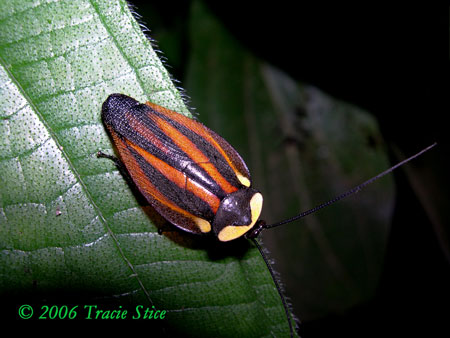
Costa Rica is home to more than 150 of the world's 3,500 species of cockroach.
Each year around forty new species are identified.
Most of the species still unknown to science live in the canopy of tropical forests.
The beautiful cockroach pictured to the right is a species of canopy roach. Only rarely is it encountered at ground level.
Scientists have identified nearly 38,000 species of spider.
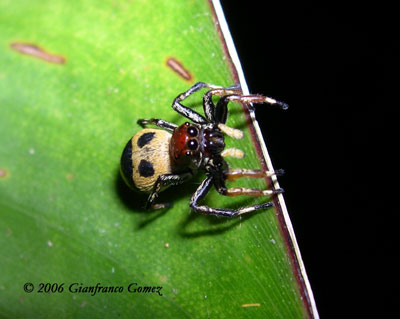
While there are roughly 4,000 species of mammal that roam the earth, there are over 4,400 species of jumping spiders alone.
Despite most people's overwhelming fear of snakes, only about 450 out of the world's 2,600 total are potentially dangerous to humans.
In Costa Rica there are 137 different species of snake, of which only 22 are venomous.
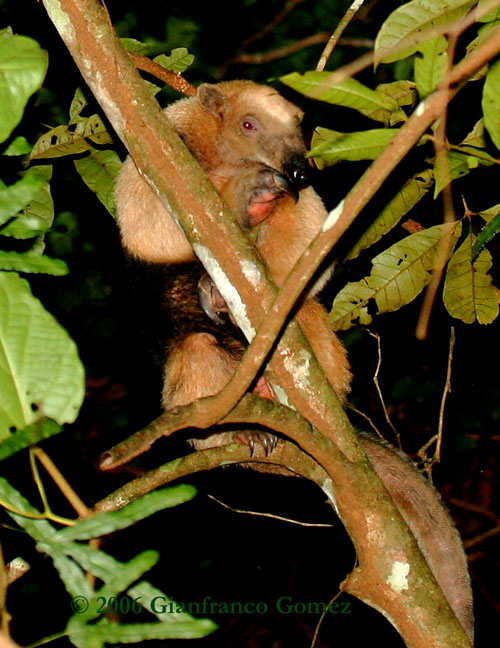
On the night tour, lucky guests may cross paths with a tamandua anteater.
The word "tamandua" comes from the Brazilian Tupi Indian words taa, meaning ant, and mandeu, meaning to trap.
Tamanduas feed on termites, ants, and occasionally, even bees.
Adult tamanduas are estimated to visit 50 to 80 ant and termite colonies each day, where they consume some 9,000 insects.
.
|
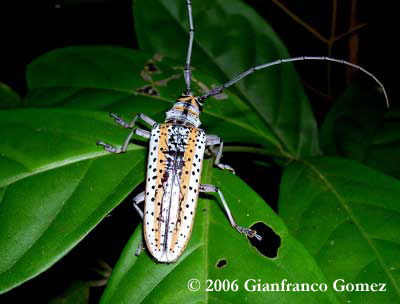
Long-horned Beetle
With a style that is as
witty as it is engaging, Tracie delivers a skillful blend of natural
history and human lore. Guests can expect Tracie to cover a
wealth of fascinating topics, such as:
Did you know some male insects sing with their genitals to attract a mate? Or that, if an insect falls victim to one STD, the truly bizarre result may be a spontaneous sex-change? For our mature audiences only, we'll take an entertaining look at the private lives of insects and spiders. Learn about love potions, fatal attractions, and bridal bondage with this tantalizing topic.
Poison gases, lethal bombs, the deployment of tens of thousands of soldiers...are these horrid agents of warfare a modern invention? Certainly not. For millions of years, insects have been waging a chemical arms race that rivals the military aspirations of nations. From the weaponry of scorpions to the legions of army ants, Tracie will take you to the battlefields of the mini-beasts. More intriguing still, guests will learn why the Pentagon and a little-known government agency have a keen interest in insect weaponry today.
Cockroach
"Take two roaches, and call me in the morning." You may not have heard this recommendation from your doctor, but, believe it or not, roaches have been in the "medicine chests" of various cultures since antiquity. Tracie has done extensive research on the medicinal use of insects by tribal and ancient societies - and how modern scientist are only now beginning to confirm their therapeutic potential. How might scorpions one day save tens of thousands of lives? You'll find out on The Night Tour.
Jumping Spider
Throughout The Night Tour, we'll explore the lives and lore of the planet's most feared, and misunderstood, creatures: the spiders and their creepy, crawly kin. We'll cover subjects as diverse as courtship and "child" care to the amazing properties of spider silk. We'll also address an array of intriguing and odd questions: Why were spiders fed mind-altering substances in the 1970's? Why do some spiders deliberately adorn their webs with the bodies of their victims? Guests should be prepared to see more eight-legged creepy-crawlies than ever before!
Juvenile Neotropical Racer
Tracie The Bug Lady and naturalist Gianfranco Gomez are avid amphibian and reptile enthusiasts. Frogs, snakes, and lizards are all commonly encountered on the tour. Whether or not you delight in or despise these cold blooded creatures, you'll certainly be amazed by the tales you'll hear. Discover the lizard that runs on water and the frog that eats snakes. Guests will enjoy many great photo opportunities, as well.
Compared to insects, spiders, frogs, and snakes, most mammals tend to be very shy creatures. They're usually highly alert and possess superior speed. Every mammal encounter on The Night Tour is a chance encounter. We do see several ocelots each year, and often from very close vantage points. In April 2006, a Puma even crossed our path. While you would have to be very lucky to see one of our Costa Rican wild cats, here is a partial list of mammals that are regularly seen: Kinkajous, Striped Hog-Nosed Skunks, Northern Raccoons, Pacas, Armadillos, Three Toed Sloths, Northern Tamandua Anteaters, Wooly Opossums, Four-eyed Opossums, Common Opossums, and a variety of bats.
|
 Six-legged
Sex and Eight-eyed Erotica
Six-legged
Sex and Eight-eyed Erotica

The Bug Lady's Guide To Drake Bay ...

Facts about Drake Bay, Costa Rica